Biochemistry: Amino Acids & Proteins
Free MCAT study guide — Biological and Biochemical Foundations of Living Systems
Illustrated Guide& PDF
Full-color, printable companion to this guide — view online or download.
Amino Acid Structure
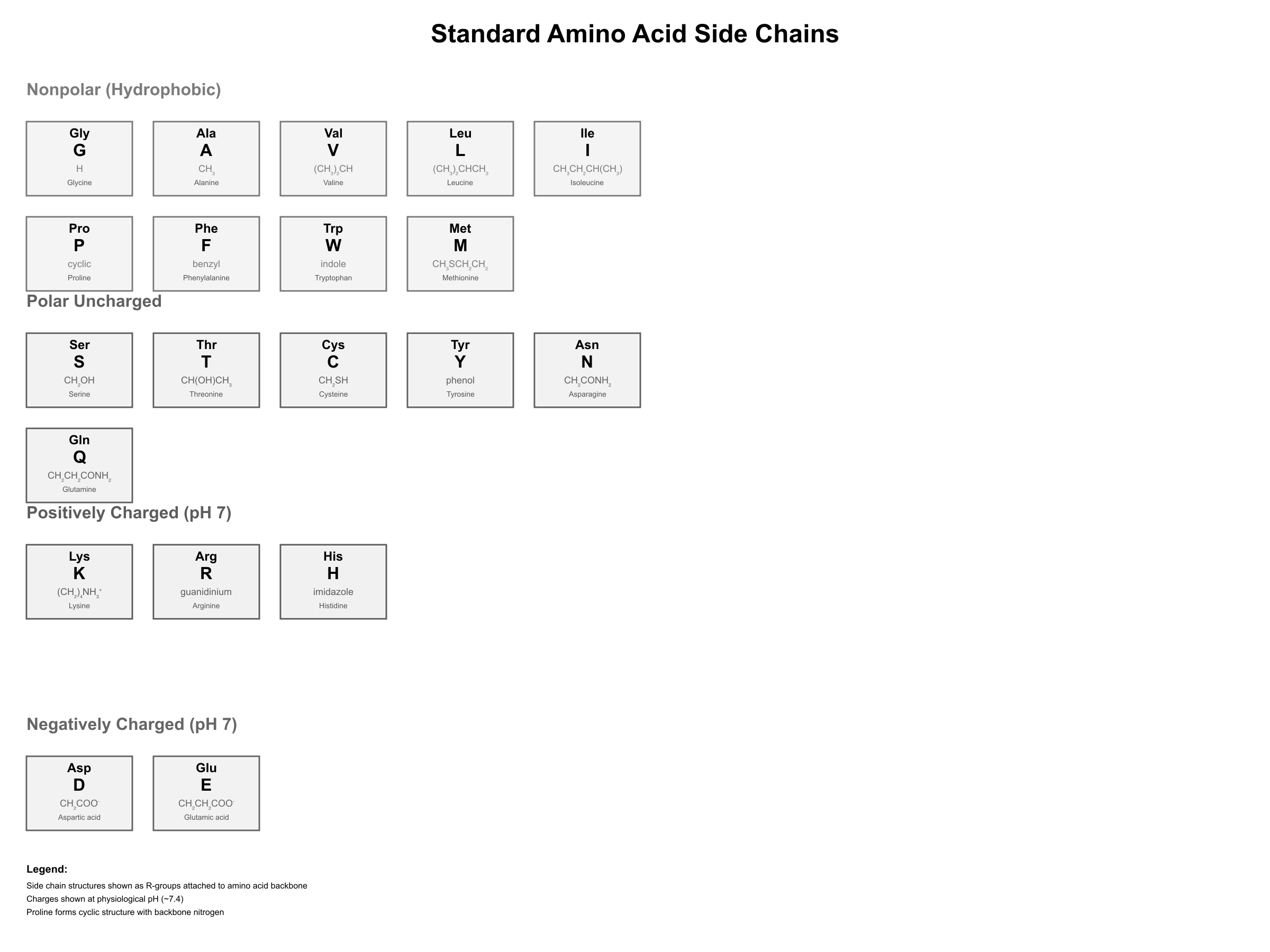
| Category | Amino Acids | Properties |
|---|---|---|
| Nonpolar | G, A, V, L, I, P, F, W, M | Hydrophobic, found in protein interior |
| Polar uncharged | S, T, C, Y, N, Q | H-bond donors/acceptors |
| Positive (pH 7.4) | K (10.5), R (12.5), H (6.0) | Charged at physiological pH (H partially) |
| Negative (pH 7.4) | D (3.65), E (4.25) | Deprotonated at physiological pH |
Key Point: Special amino acids: G (smallest, flexible), P (rigid ring, helix breaker), C (disulfide bonds), H (catalytic sites).
pI = (pKa₁ + pKa₂) / 2 (for AAs with no ionizable side chain)
Protein Structure
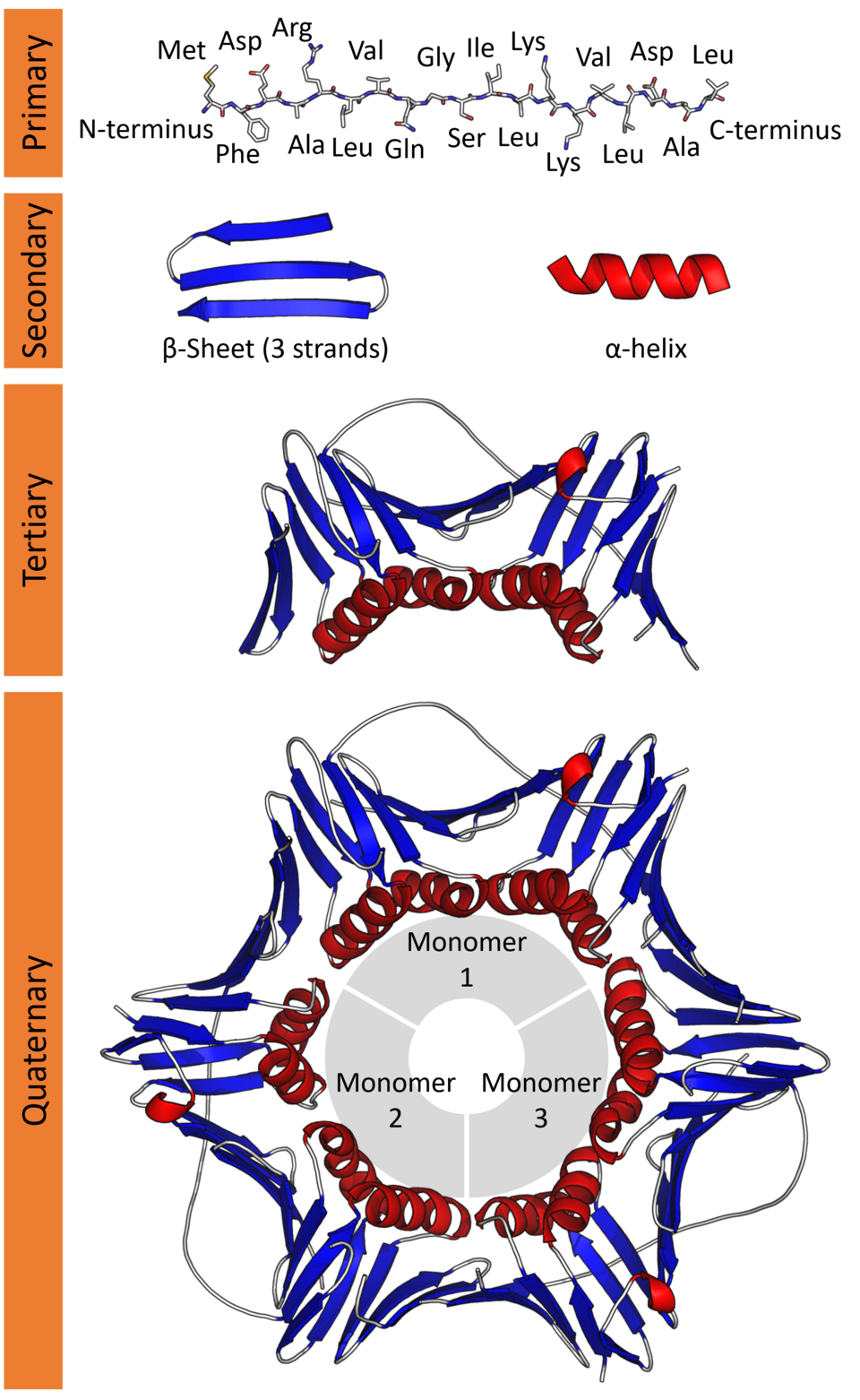
| Level | Bonds/Forces | Key Features |
|---|---|---|
| Primary (1°) | Peptide bonds (covalent) | Linear sequence — determines all higher structure |
| Secondary (2°) | H-bonds (backbone N-H↔C=O) | α-helices, β-sheets |
| Tertiary (3°) | R-group interactions | Hydrophobic, ionic, disulfide, H-bonds |
| Quaternary (4°) | Same as 3° | Multiple subunits (e.g., Hb α₂β₂) |
Enzyme Kinetics
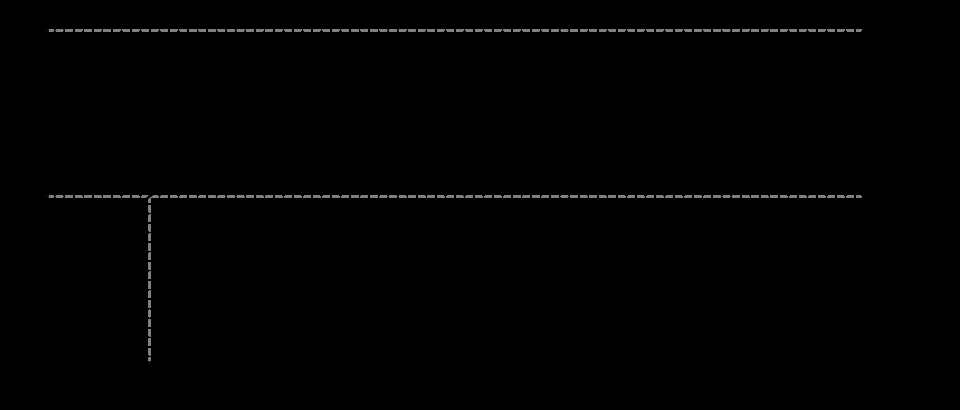
v = Vmax[S] / (Km + [S])
| Inhibitor Type | Km Effect | Vmax Effect | Binds |
|---|---|---|---|
| Competitive | ↑ (apparent) | Unchanged | Active site |
| Noncompetitive | Unchanged | ↓ | Allosteric site |
| Uncompetitive | ↓ | ↓ | ES complex only |
| Mixed | ↑ or ↓ | ↓ | E or ES |
Related Biological and Biochemical Foundations of Living Systems Study Guides
Amino Acids and Protein StructureBiochemistry: MetabolismBiology: Cell Biology & SignalingBiology: Molecular Biology & GeneticsBiology: Organ SystemsCardiovascular Physiology: Heart, Blood, and Hemodynamics
Browse all free MCAT study guides or read MCAT strategy on the DoctorMCAT blog.
Practice What You've Learned
Test your understanding with our question bank and practice tests.
Start Practicing Free