Psychology: Neuroscience & Sensation
Free MCAT study guide — Psychological, Social, and Biological Foundations of Behavior
The Nervous System
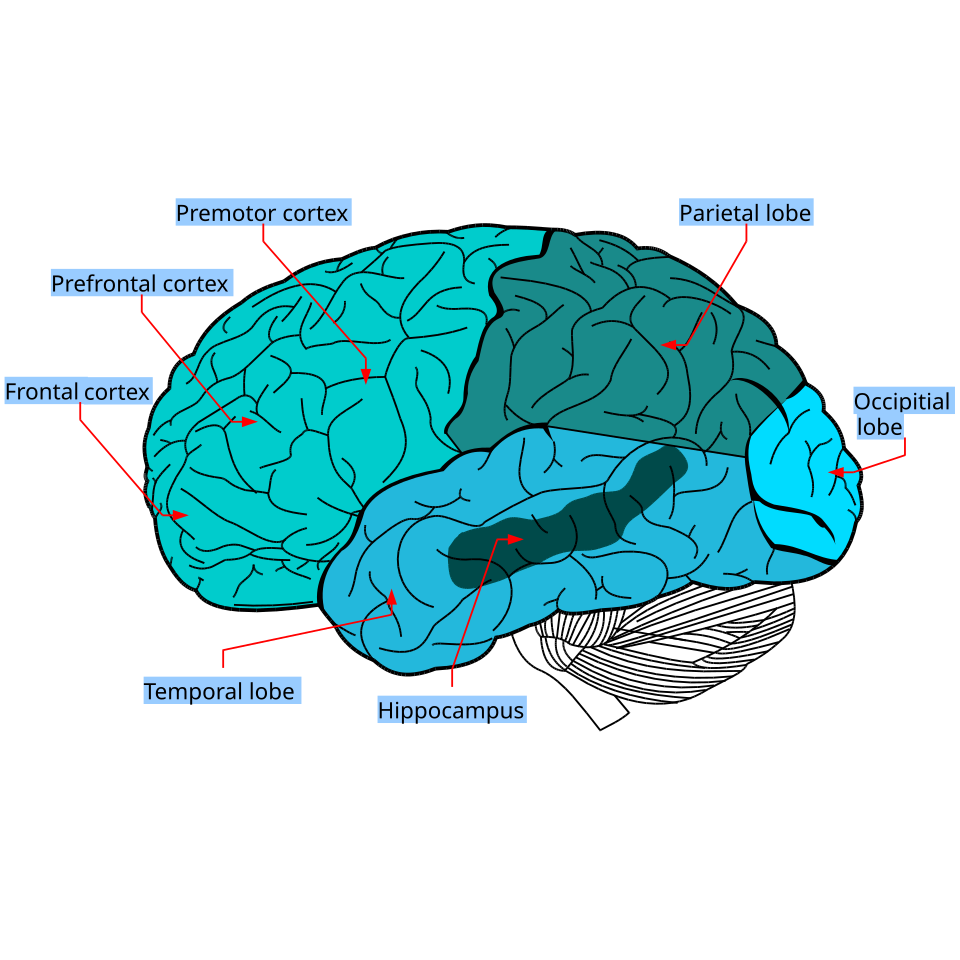
| Structure | Function |
|---|---|
| Frontal lobe | Executive function, motor cortex, Broca's (speech production) |
| Parietal lobe | Somatosensory cortex, spatial awareness |
| Temporal lobe | Auditory cortex, Wernicke's (comprehension), hippocampus |
| Occipital lobe | Visual processing (V1) |
| Cerebellum | Coordination, balance, motor learning |
| Hypothalamus | Homeostasis: hunger, thirst, temperature, circadian rhythm |
| Thalamus | Sensory relay station (everything except smell) |
| Amygdala | Fear, emotion processing |
| Hippocampus | Memory formation (short-term → long-term) |
Neurotransmitters
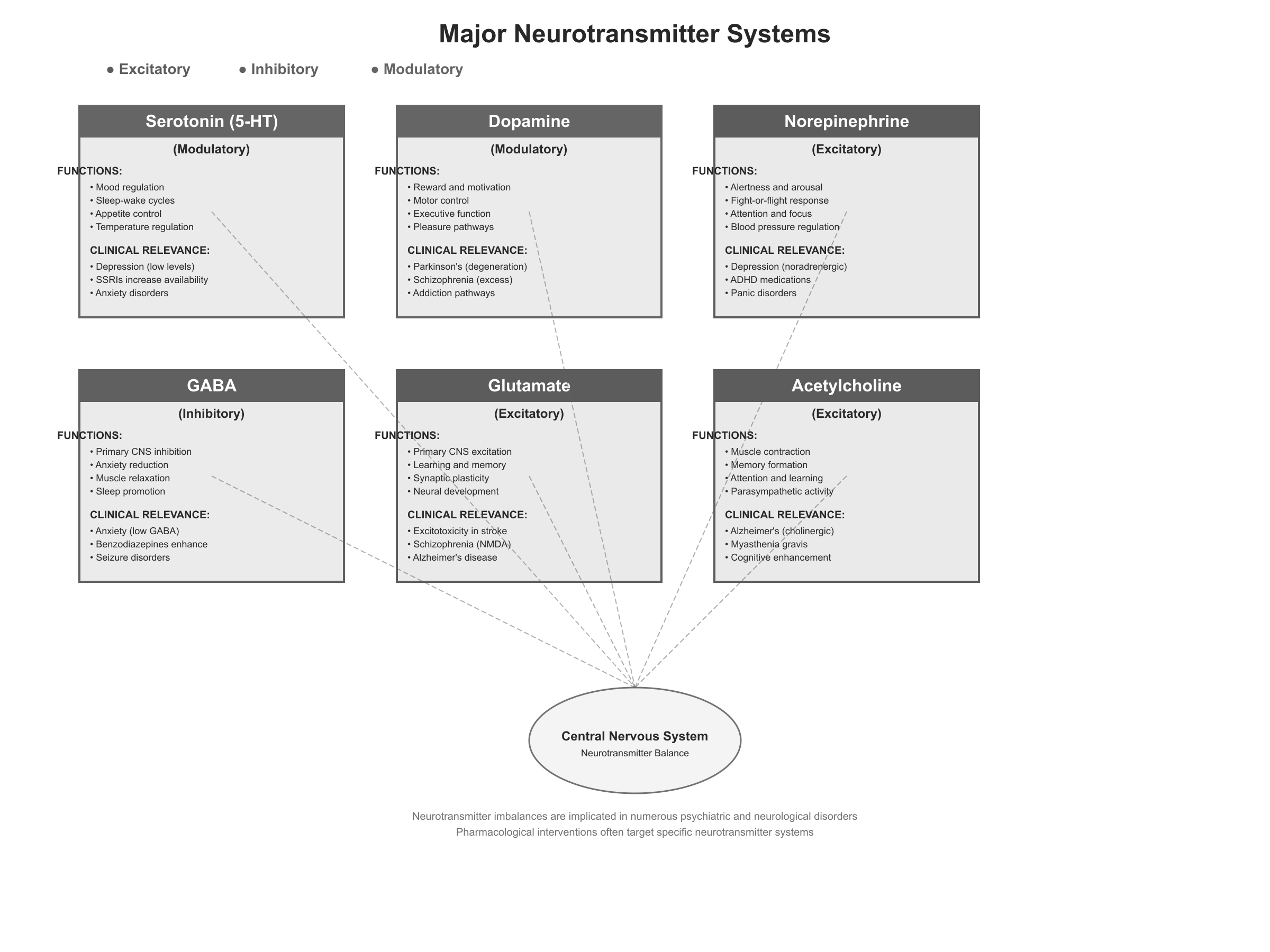
| NT | Function | Clinical Relevance |
|---|---|---|
| Dopamine | Reward, motivation, movement | ↓ in Parkinson's, ↑ in schizophrenia |
| Serotonin (5-HT) | Mood, sleep, appetite | ↓ in depression (SSRIs block reuptake) |
| GABA | Main inhibitory NT | Benzodiazepines enhance GABA |
| Glutamate | Main excitatory NT | Learning, memory; excess = excitotoxicity |
| Acetylcholine | Memory, muscle contraction | ↓ in Alzheimer's, blocked by curare |
| Norepinephrine | Alertness, fight-or-flight | SNRIs for depression |
Sensation & Perception
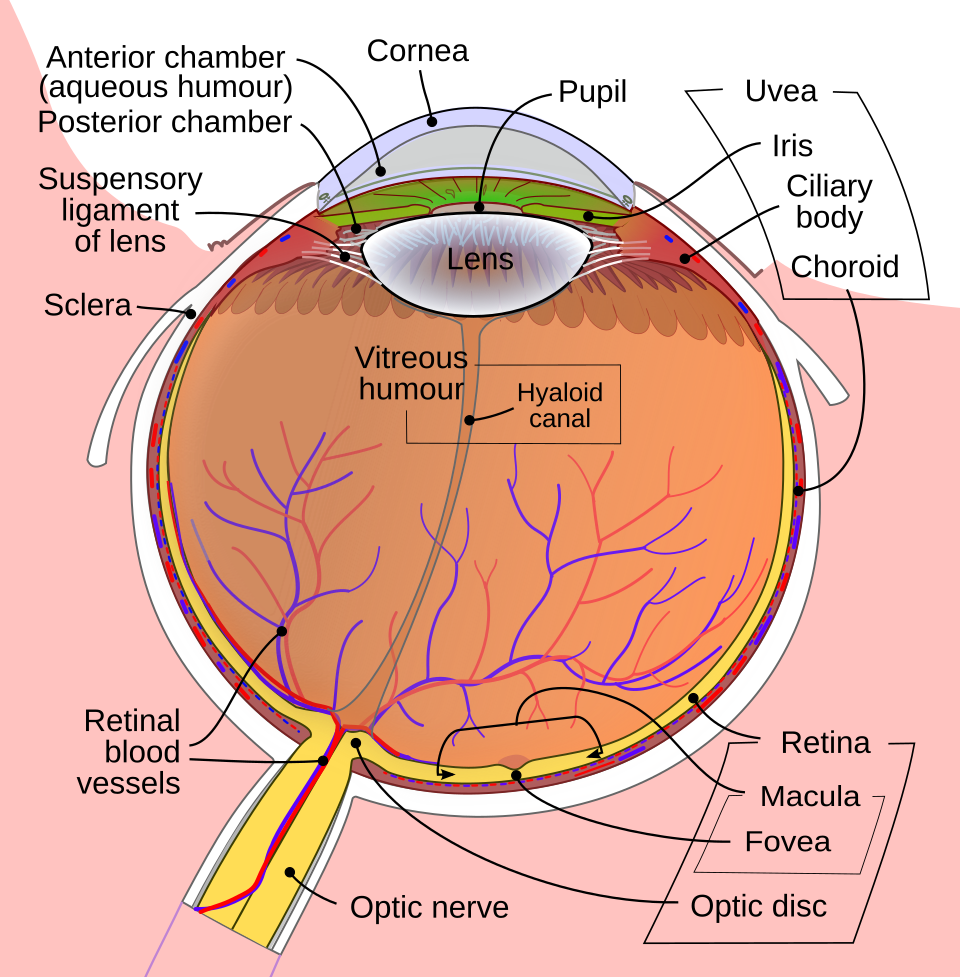
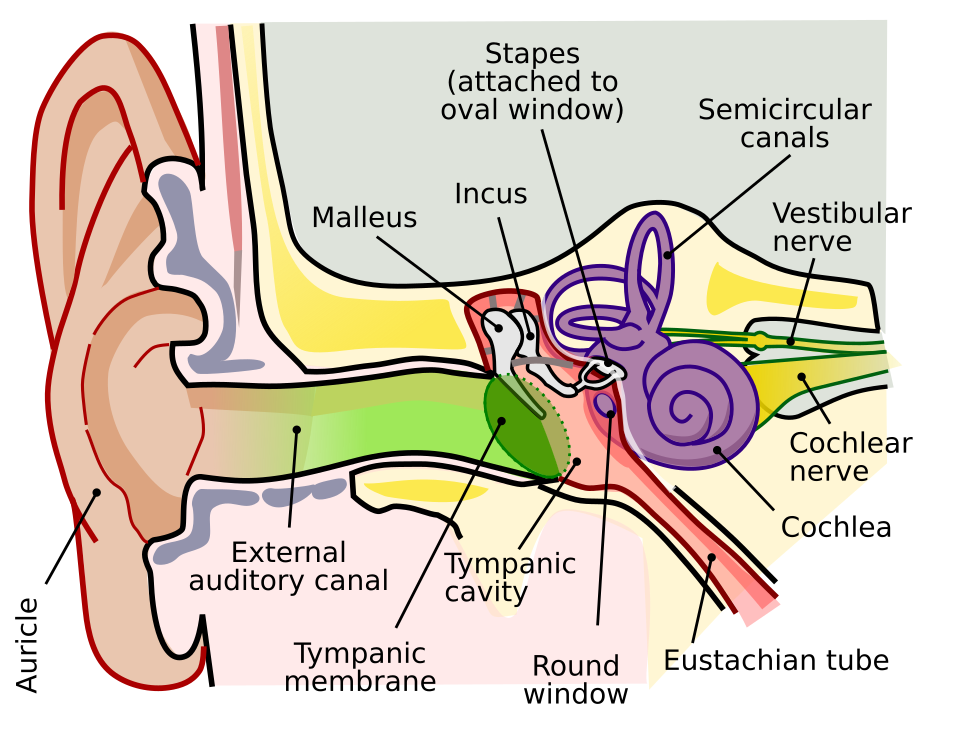
Key Point: Rods: dim light, peripheral vision, black/white. Cones: bright light, central (fovea), color (RGB).
Related Psychological, Social, and Biological Foundations of Behavior Study Guides
Biological Basis of Behavior: Brain Structure and NeurotransmittersHealth Disparities and Social Determinants of HealthLearning and MemoryPsychology: Learning, Memory & DevelopmentSensation, Perception, and ConsciousnessSocial Psychology: Groups and Influence
Browse all free MCAT study guides or read MCAT strategy on the DoctorMCAT blog.
Practice What You've Learned
Test your understanding with our question bank and practice tests.
Start Practicing Free